Plain-language overview
Endocrine and metabolic cell-therapy research includes several very different goals. These include changing an autoimmune response in type 1 diabetes, treating complications of type 2 diabetes, replacing insulin-producing cells, studying inflammation associated with obesity, and reducing cardiometabolic risk.
Mesenchymal stromal cells (MSCs) and extracellular vesicles (EVs) may influence immune, inflammatory, vascular, and metabolic signaling. Those effects are not the same as replacing pancreatic beta cells.
Evidence must remain tied to the exact therapeutic goal, product, route, disease phenotype, background treatment, and clinical outcome. Established diabetes, obesity, cardiovascular, and renal care should not be displaced by investigational regenerative claims.
Type 1 diabetes
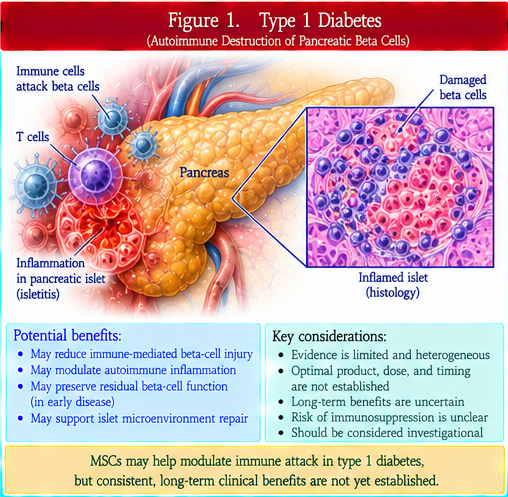
Type 1 diabetes is an autoimmune disease in which the immune system destroys the pancreatic beta cell. A beta cell produces insulin, and loss of enough beta cells causes insulin deficiency.
MSC and EV research has examined immune regulation, immune tolerance, inflammation, and possible preservation of remaining beta-cell function. This is different from replacing lost beta cells.
C-peptide can help measure the body’s own insulin production. Glycated hemoglobin and time in range describe different aspects of glucose control. Severe hypoglycemia and diabetic ketoacidosis are important clinical outcomes. Insulin remains essential unless a validated replacement strategy provides sufficient endogenous insulin production.
Type 2 diabetes complications
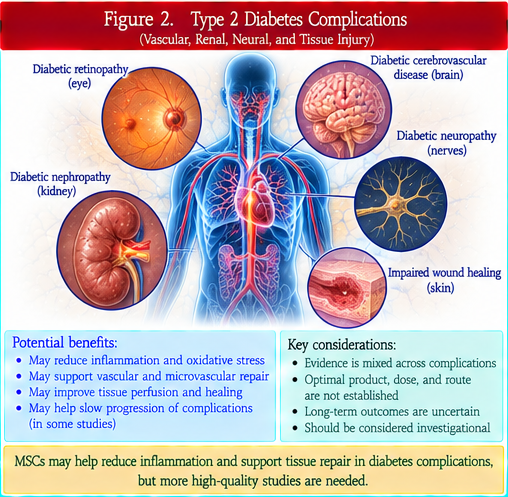
Type 2 diabetes can damage many organs through metabolic, vascular, and inflammatory mechanisms. Complications can include kidney disease, neuropathy, retinopathy, cardiovascular disease, and impaired wound healing.
Insulin resistance is an important feature of type 2 diabetes. A microvascular complication affects smaller vessels, while a macrovascular complication involves larger-vessel disease such as coronary or peripheral arterial disease.
MSC and EV research has examined anti-inflammatory, vascular, and tissue-supportive effects. Improvement in glucose, inflammation, perfusion, or imaging does not prove prevention of organ complications or cardiovascular events.
Islet-cell replacement
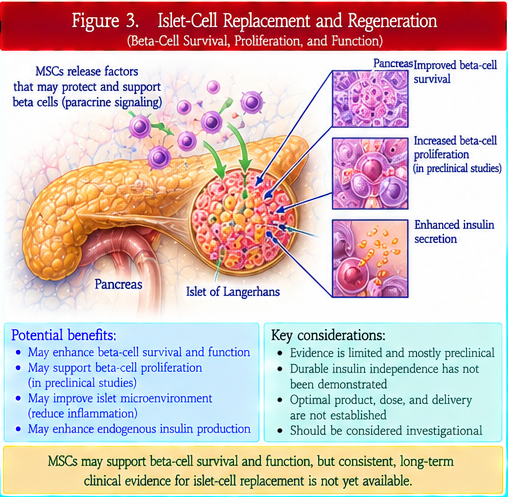
Islet-cell replacement is a different therapeutic goal from MSC treatment. It attempts to restore glucose-responsive insulin secretion by replacing functional beta-cell mass.
Islet transplantation uses donor islets. A stem-cell-derived islet is produced from cells differentiated toward pancreatic tissue; a pluripotent stem cell can serve as a starting cell in some programs.
Encapsulation and immune-evasive engineering are being studied to protect transplanted cells. Important challenges include alloimmunity, recurrent autoimmunity, immunosuppression toxicity, procedure-related complications, durability, and product-specific risks. Meaningful success requires sustained insulin production and clinically important improvement, not simply cell survival.
Obesity-associated inflammation
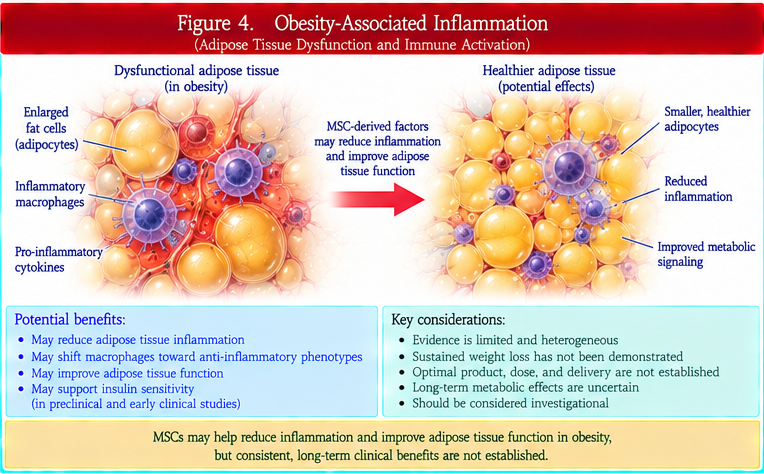
Obesity-associated inflammation is chronic low-grade immune and metabolic signaling associated with expansion and stress of adipose tissue.
An adipocyte is a fat-storage cell that also releases signaling molecules called adipokines. Ectopic fat means fat deposited in tissues where excess fat can contribute to dysfunction. These changes can promote insulin resistance and broader metabolic disease.
MSC and EV studies have explored inflammatory, mitochondrial, adipose-tissue, and insulin-signaling pathways, mostly in preclinical models. Reduced inflammatory markers do not prove meaningful weight loss, prevention of diabetes, fewer cardiovascular events, or improved survival.
Metabolic syndrome
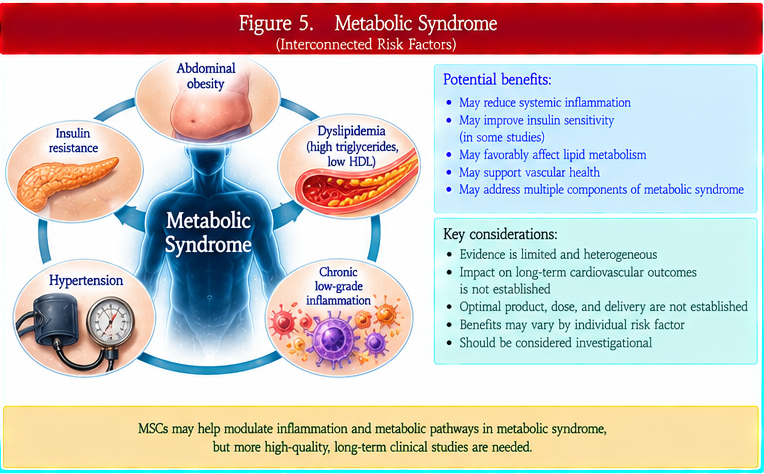
Metabolic syndrome describes a clustering of cardiometabolic risk factors rather than one disease requiring tissue regeneration.
Common features include central adiposity, dysglycemia or insulin resistance, high blood pressure, elevated triglyceride levels, and reduced HDL cholesterol. Together these abnormalities contribute to cardiometabolic risk.
MSC and EV research may examine inflammatory, vascular, liver, adipose, or insulin-signaling pathways. Changes in biomarkers do not establish reduced cardiovascular events or improved survival. Lifestyle intervention and evidence-based treatment of obesity, diabetes, blood pressure, lipids, and cardiovascular risk remain central.
Why these therapies must be separated
MSCs, MSC-derived EVs, donor islets, stem-cell-derived islet products, pancreatic progenitor products, encapsulated cells, and immune-engineered cells are biologically different interventions.
Systemic MSC treatment, portal-vein islet infusion, and implanted or encapsulated cell products also have fundamentally different routes, risks, and therapeutic objectives.
How endocrine and metabolic studies can mislead
A laboratory marker can improve without producing a meaningful clinical benefit. Glucose measurements, inflammatory markers, imaging, insulin sensitivity, or cell-survival measurements must be interpreted in the context of patient-important outcomes.
For beta-cell replacement, important outcomes include endogenous insulin production, insulin requirements, severe hypoglycemia, glucose control, durability, and safety. For obesity and metabolic disease, weight, organ complications, cardiovascular outcomes, quality of life, and survival may be more important than isolated biomarkers.
Safety considerations
Potential risks depend heavily on the treatment. They can include infection, immune reactions, thrombo-inflammatory effects, procedural complications, hypoglycemia during treatment changes, and toxicity from immunosuppression.
Cell-replacement products can also raise product-specific concerns such as unwanted cell growth. Long-term surveillance is therefore particularly important.
Questions patients should ask
What exact therapeutic goal is being proposed—immune modulation, treatment of a complication, or replacement of insulin-producing cells? What exact product was studied? Is it an MSC, an EV preparation, donor islets, or a stem-cell-derived islet product? What dose and route were used? Is immunosuppression required? Did controlled human studies show durable patient-important benefit? What established diabetes, obesity, cardiovascular, or renal treatments are available?
Bottom line
Endocrine and metabolic cell therapies must be evaluated according to their exact therapeutic objective.
MSC or EV immunomodulation is not beta-cell replacement. Likewise, improvements in inflammatory or metabolic biomarkers do not prove durable weight loss, prevention of diabetes complications, reduced cardiovascular events, or improved survival.
How this review was prepared
This Patient Edition was derived directly from the explicitly approved 0809 Professional Edition and preserves all five controlling endocrine and metabolic Points.